⭐ Our Pick: Moultrie Edge 2 — 4.5/5
Best for: Hunters and landowners who want scouting photos sent straight to their phone — 36MP stills, 1080p video, and auto-connecting nationwide 4G LTE with no carrier to choose.
Skip if: Your spot has no cell signal (get the GardePro E5S instead), or you need a pan-tilt security camera for off-grid property — that’s the REOLINK Go PT Plus.
As an Amazon Associate we earn from qualifying purchases. How we research.
Best Trail Cameras for Wildlife & Security (2026)
Whether you’re patterning a buck, watching a remote cabin, or just curious what walks through your backyard at 2 AM, a trail camera is the cheapest set of eyes you can own. The catch: the category is full of inflated megapixel claims, confusing cellular plans, and cameras that die in the first cold snap.
We compared five of the most popular trail cameras on Amazon US for 2026 — covering cellular and non-cellular models, budget and premium tiers — on trigger speed, night vision quality, detection range, battery practicality, and the real cost of ownership including data plans. Specs were verified against current Amazon listings (October 2026).
The short answer: the Moultrie Edge 2 is our top pick for most people — it auto-connects to the strongest nationwide 4G network, sends 36MP photos to your phone, and sits at the top of Amazon’s trail camera best-seller charts. If you have no cell signal, the GardePro E5S is the best SD-card camera for the money. For off-grid security with live viewing, the REOLINK Go PT Plus stands alone.
As an Amazon Associate we earn from qualifying purchases.
Quick Comparison of the Best Trail Cameras
| Product | Best for | Key spec | Price tier | Our rating |
|---|---|---|---|---|
| Moultrie Edge 2 | Cellular scouting | 36MP; auto-connect 4G LTE; 1080p video | Mid-range | 4.5/5 |
| GardePro E5S | Budget, no cell signal | 64MP; 0.1s trigger; 100ft no-glow | Budget | 4.4/5 |
| REOLINK Go PT Plus | Off-grid security | 360° pan-tilt; solar powered; 4G LTE | Premium | 4.4/5 |
| SPYPOINT Link-Micro-LTE | Cheapest cellular | 10MP photos; free 100-photo plan | Budget | 4.2/5 |
| Bushnell CORE S-4K | Best image quality | 4K video; 110ft no-glow range | Mid-range | 4.3/5 |
Prices change frequently — click through to see the current price. Cellular models also need a data plan; check the carrier details on the listing.
Detailed Trail Cameras Reviews
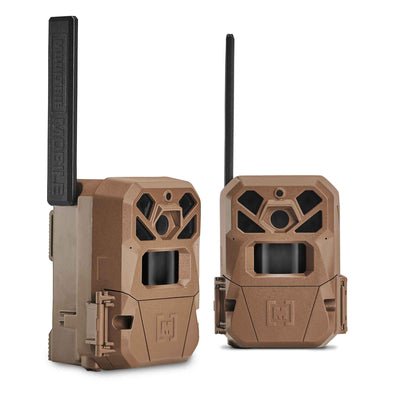
Moultrie Edge 2 — Our Top Pick
The Edge 2 solves the two most annoying things about cellular trail cameras: choosing a carrier and overpaying. Its auto-connect technology latches onto whichever nationwide 4G network is strongest at your location, so there’s no Verizon-vs-AT&T gamble. And it consistently ranks #1–2 in Amazon’s Hunting & Trail Cameras category, which tells you how many hunters have voted with their wallets.
- Photos/video: 36MP stills; 1080p video with HD audio; on-demand photo/video requests from the app
- Cellular: 4G LTE with auto-connect to the strongest nationwide network — no carrier choice needed
- Detection: 100ft detection range; low-glow infrared flash
- Build: Compact housing; runs on AA batteries (lithium recommended for cold weather)
- Plans: Requires a Moultrie Mobile plan; pricing varies by photo volume
Pros: Auto-connect eliminates the carrier guessing game; consistently top-ranked by buyers; on-demand requests let you check in anytime; 36MP stills are sharp for scouting; simple setup compared to older cellular cams.
Cons: The data plan is an ongoing cost — factor it into your budget; low-glow (not no-glow) flash produces a faint red glow some wary animals notice; AA batteries in cold weather drain fast unless you use lithium; 1080p video rather than 4K.
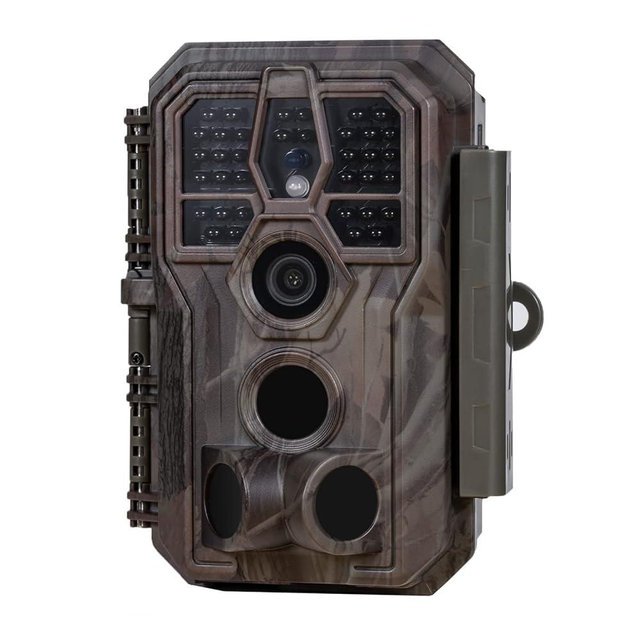
GardePro E5S — Best Budget Non-Cellular Camera
No cell signal? No problem — and no monthly bill either. The GardePro E5S is a classic SD-card trail camera done right: a blazing 0.1-second trigger speed, true no-glow infrared that won’t spook game, and 100 feet of night vision range. It regularly sits in Amazon’s top 5 trail cameras, which is remarkable for a camera with no cellular features at all. You check it by pulling the SD card — old school, but it never fails because of a dead zone.
- Photos/video: 64MP stills (interpolated); 1296p HD video with audio
- Trigger: 0.1-second trigger speed — among the fastest here
- Night vision: 100ft no-glow infrared — invisible flash
- Build: IP66 weatherproof; runs on 8 AA batteries; supports up to 512GB SD cards
- Connectivity: None — SD card retrieval only
Pros: No data plan, ever — the total cost of ownership is just batteries and SD cards; 0.1s trigger catches fast-moving animals; true no-glow flash is ideal for wary game; huge SD card support means fewer check-ins; excellent value in the budget tier.
Cons: You have to physically visit the camera to see photos — no remote scouting; 8 AAs get expensive unless you buy in bulk or use rechargeables; 64MP is interpolated (the real sensor resolution is lower, as with most cameras in this class); no app or wireless features at all.
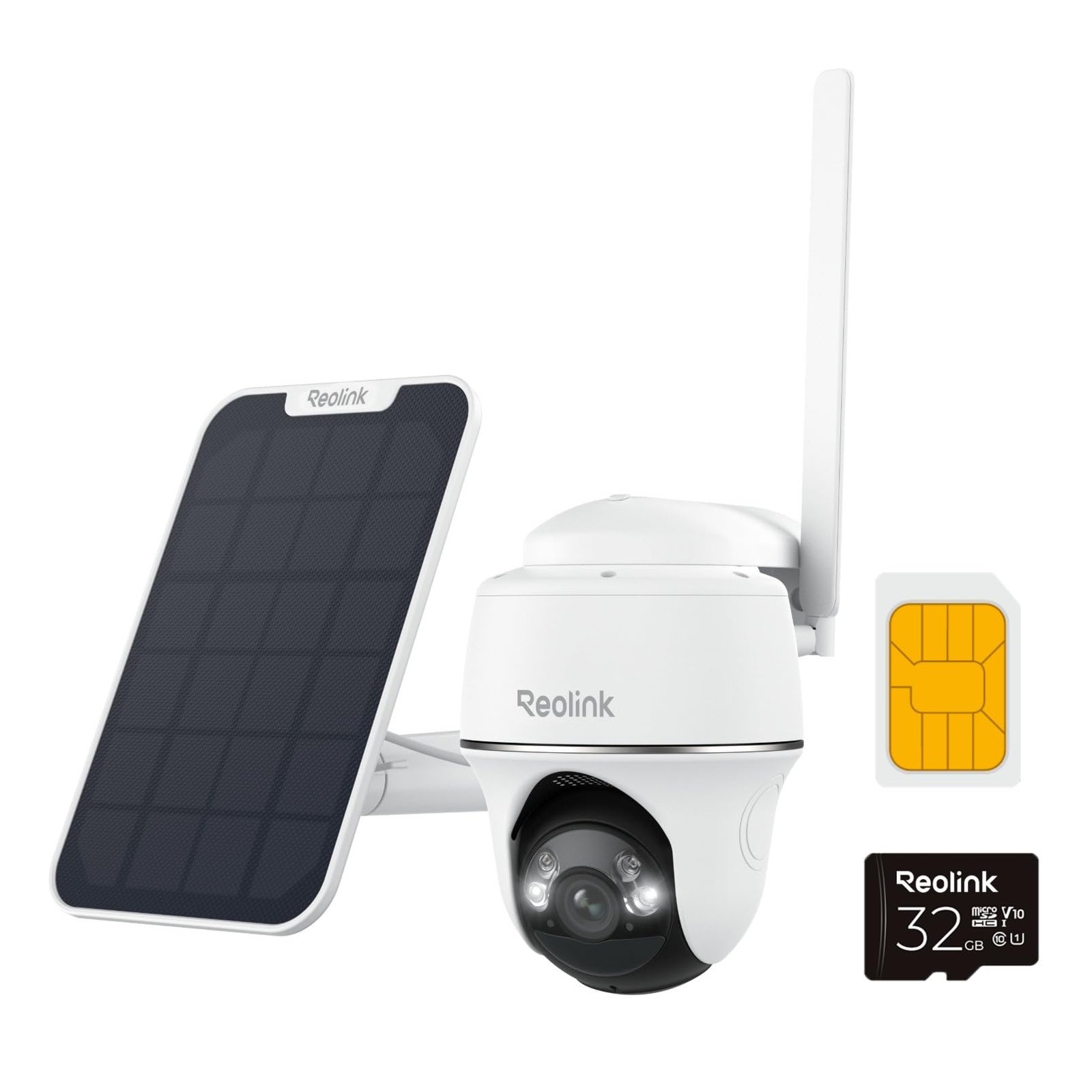
REOLINK Go PT Plus — Best for Off-Grid Security
This is a different animal from the hunting cameras above: a pan-tilt security camera that happens to work brilliantly as a trail camera. It runs on 4G LTE (no WiFi needed), rotates 360°, and ships with a solar panel, SIM card, and 32GB SD card in the box. Point it at a gate, barn, cabin, or remote property and you get live viewing plus smart person/vehicle/animal detection alerts — things traditional trail cams can’t do.
- Video: 5MP (2K+) video; 360° pan and 140°+ tilt; 16x digital zoom
- Power: Rechargeable battery + included solar panel for continuous operation
- Cellular: 4G LTE with included SIM; no WiFi or wiring required
- Night vision: Color night vision with spotlight; infrared mode available
- Smart features: AI person/vehicle/animal detection; two-way audio; app with live view
Pros: The only camera here with live remote viewing and pan-tilt control; solar panel means truly set-and-forget power; smart detection cuts false alerts from branches and shadows; two-way audio lets you talk through the camera; great for cabins, gates, and construction sites.
Cons: Premium price tier plus a cellular data plan; pan-tilt mechanisms have more moving parts to fail in harsh weather; 5MP resolution is lower than the still-photo specialists; heavier and more visible than a camo trail cam — not ideal for stealthy hunting setups.
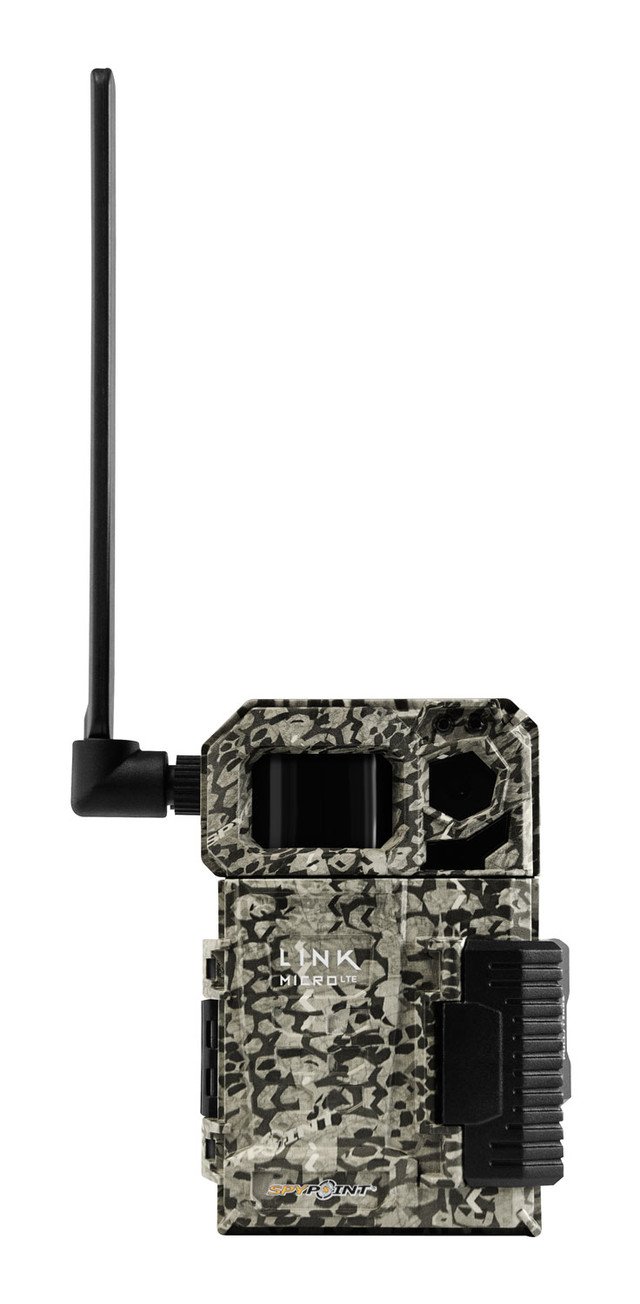
SPYPOINT Link-Micro-LTE — Cheapest Way Into Cellular
SPYPOINT’s pitch is simple: cellular scouting for less than the cost of a tank of gas per camera. The Link-Micro-LTE is tiny, sips battery, and — uniquely — includes a genuinely free plan tier (100 photos per month per camera via the app). It’s photo-only with a modest 10MP sensor, but for checking whether deer are hitting a feeder, that’s plenty.
- Photos: 10MP stills; photo and multi-shot modes (photo only — no video)
- Cellular: LTE; choose the carrier variant with the best signal in your area
- Trigger: 0.4–0.5 second trigger speed; 80ft flash and detection range
- Power: Requires 8 AA lithium batteries or LIT-10 pack (not included); microSD up to 32GB (not included)
- Plans: Free 100-photo/month plan available; paid tiers for more
Pros: Lowest entry cost into cellular scouting; the free photo plan is genuinely useful for low-traffic spots; extremely compact and easy to hide; multi-shot mode captures sequences; simple app setup.
Cons: Photo-only — no video at all; batteries and microSD card are NOT included, so budget extra; 10MP is the lowest resolution here; you must pick the right carrier variant (Verizon vs nationwide); 80ft range is shorter than the competition.
Check price: SPYPOINT Link-Micro-LTE on Amazon →
Bushnell CORE S-4K — Best Image Quality (Non-Cellular)
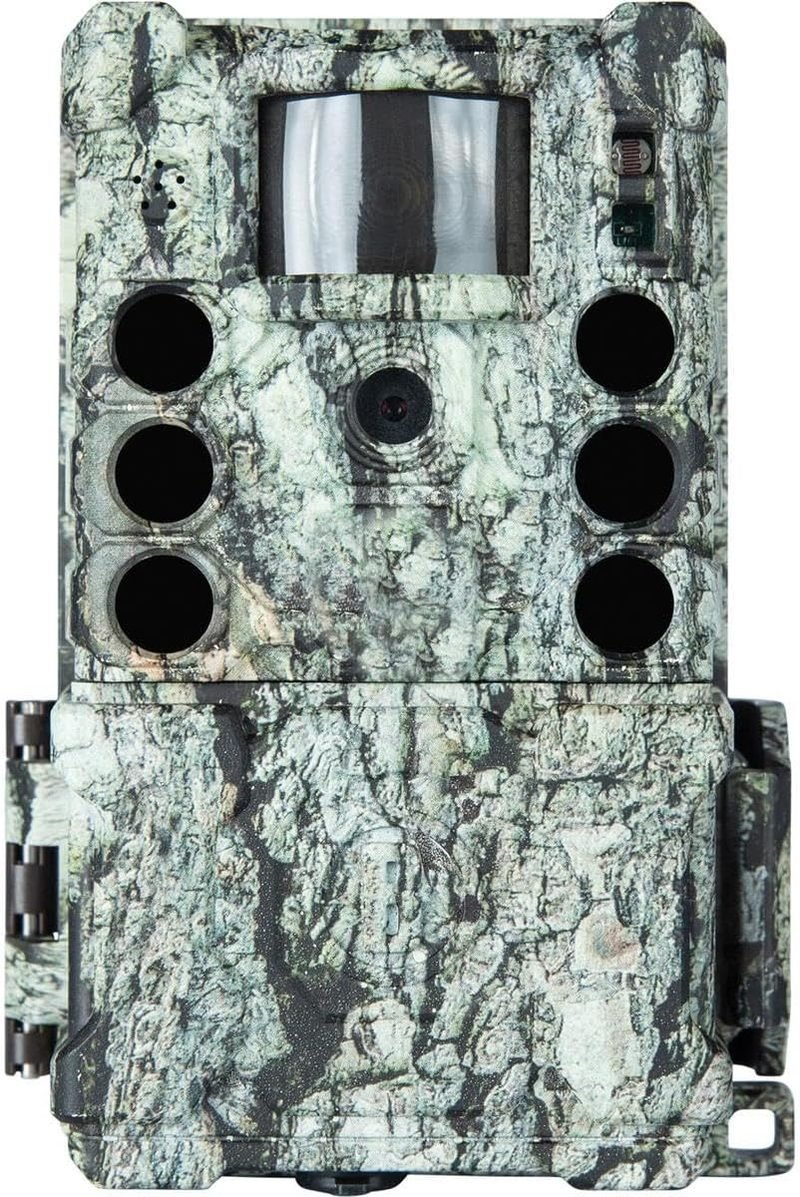
Bushnell is the legacy optics brand in this space, and the CORE S-4K shows it: real 4K video, up to 30MP stills, and a 110-foot no-glow night range — the longest here. The 1.5″ color viewscreen lets you frame shots and review footage in the field without pulling the card. If your priority is the best-looking footage rather than remote transmission, this is the camera.
- Photos/video: Up to 30MP stills; 4K video at 30fps
- Trigger: 0.2-second trigger speed; 1-second recovery rate
- Night vision: 110ft no-glow infrared range
- Display: 1.5″ color viewscreen for setup and in-field review
- Connectivity: None — SD card retrieval
Pros: Best video quality of any non-cellular camera here; longest no-glow night range; the viewscreen is genuinely useful for aiming and reviewing; Bushnell’s 2-year warranty and brand support; fast recovery rate for busy trails.
Cons: No cellular option at all — you’re hiking to check cards; 4K video eats SD card space and battery faster; mid-range price for a camera with no remote features; larger file sizes mean more frequent card swaps on active trails.
Check price: Bushnell CORE S-4K on Amazon →
How to Choose the Best Trail Cameras
Cellular or SD card? Decide by your cell signal. Cellular cameras send photos to your phone — incredible for scouting — but they’re useless where there’s no signal, and they need a data plan (a monthly fee). SD-card cameras work anywhere and cost nothing to run, but you hike to check them. No signal at your spot? The decision makes itself.
Trigger speed matters more than megapixels. A 0.1–0.2 second trigger catches animals mid-stride; a 1-second trigger photographs empty trail. Meanwhile, most “64MP” claims in this category are interpolated — the real sensor is much smaller. Trust trigger speed and lens quality over the megapixel number.
Understand no-glow vs low-glow. No-glow (black) infrared is invisible — best for wary game and security. Low-glow (red) LEDs emit a faint red flash visible up close; the range is often slightly better, but sharp-eyed animals and people can spot it. For hunting pressured deer, go no-glow.
Budget for the real total cost. The camera is only the start: cellular plans run monthly, 8-packs of lithium AAs add up (lithium is worth it — alkalines die in the cold), and you’ll want large SD cards. A “cheap” cellular camera with a pricey plan can cost more over two seasons than a premium one with a cheaper plan.
Match detection range to your setup. A feeder 30 feet away doesn’t need a 100-foot detection range — but a wide food plot does. Longer range also means more false triggers from swaying branches, so use sensitivity settings rather than maxing everything out.
Think about power for long deployments. For cameras you won’t visit for months, lithium AAs last far longer than alkalines, and solar panels (like the REOLINK’s) eliminate battery anxiety entirely. Whatever you choose, test battery life in the actual cold before trusting a season to it.
Who Should Buy a Trail Camera — and Who Should Skip
Buy one if you:
- Hunt and want to pattern game movement without pressuring the area with daily visits
- Own remote property, a cabin, a barn, or a gate you can’t watch in person
- Are a wildlife watcher who wants to see what visits at night — it’s genuinely addictive
- Need evidence of trespassers, package thieves, or nuisance animals
Skip (or reconsider) if you:
- Need real-time security with recording and alerts — a dedicated home security camera with continuous recording serves you better
- Want to monitor a wide area live — that’s the REOLINK’s job, not a standard trail cam’s
- Live where cellular cameras are banned for hunting — several states restrict cellular cams during season, so check your local regulations first
Frequently Asked Questions About Trail Cameras
Do trail cameras need WiFi?
No. Traditional trail cameras store photos on an SD card and need nothing at all. Cellular trail cameras use 4G LTE (like a phone) and need cell signal but no WiFi. Only WiFi-enabled models need a nearby network — and those are rare in this category.
How much does a cellular trail camera plan cost?
It varies by brand and photo volume — typically a small monthly fee per camera. SPYPOINT offers a free tier (100 photos/month), which is enough for low-traffic spots. Check the current plan pricing on the manufacturer’s site before you buy, since it’s a real ongoing cost.
Will the infrared flash scare deer?
No-glow (black flash) cameras are effectively invisible — animals don’t react to them. Low-glow cameras emit a faint red glow that most deer ignore but very wary animals may notice. White-flash cameras take color night photos but will absolutely spook game; they’re better for security use.
How long do batteries last in a trail camera?
With lithium AA batteries, anywhere from 2–6 months depending on photo volume, temperature, and cellular transmission. Alkaline batteries die much faster in cold weather — sometimes in weeks. For set-and-forget deployments, lithium batteries or a solar panel are worth the investment.
Can trail cameras be used for home security?
Yes, with caveats. They’re great for remote gates, barns, and cabins with no power. But they don’t record continuously, don’t integrate with smart home systems, and have slower alerts than purpose-built cameras. For a house with WiFi and power, see our home security camera roundup instead.
What’s the difference between 0.1s and 0.5s trigger speed?
It’s the difference between photographing the deer and photographing where the deer was. On a trail where animals walk past at normal pace, 0.5 seconds is usually fine. At a crossing where they trot through, 0.1–0.2 seconds captures dramatically more usable shots.
Final Verdict: Best Trail Cameras
The Moultrie Edge 2 is our pick for most buyers: auto-connecting nationwide 4G, 36MP photos with 1080p video, and a best-seller track record that says hunters trust it season after season. The cellular plan is an ongoing cost, but remote scouting is worth it. After comparing all the options, this remains our top recommendation for the best trail cameras.
No cell signal? Get the GardePro E5S — the fastest trigger and true no-glow flash with zero monthly cost. Need live viewing and security features off-grid? That’s the REOLINK Go PT Plus. And if footage quality is everything, the Bushnell CORE S-4K shoots the best video here.
As an Amazon Associate we earn from qualifying purchases. Prices and availability change frequently — see Amazon for the latest.
How we researched: We compared specifications from current Amazon listings (verified October 2026), aggregated common pros and cons from verified-purchase reviews and hunting forums, and scored the factors that matter most in a trail camera: trigger speed, night vision, detection range, power practicality, and total cost including data plans. Brand claims about range, resolution, and battery life are the manufacturers’ own figures and were not independently tested by us. We did not receive free products from any brand. Last updated: October 13, 2026.
Manufacturer resources for trail cameras: Moultrie, REOLINK, Bushnell.