


⭐ Our Pick: Lavazza Super Crema — 4.5/5
Best for: Home espresso drinkers who want thick, reliable crema and a forgiving medium roast — especially in milk drinks like lattes and cappuccinos.
Skip if: You want the boldest dark-roast punch (that’s the illy Intenso) or maximum-caffeine intensity (that’s Death Wish Espresso).
As an Amazon Associate we earn from qualifying purchases. How we research.
Best Espresso Beans for Home Brewing (2026) — 6 Compared
Great espresso starts before the machine — it starts with the beans. The roast level, blend, and freshness of your coffee determine whether your shot pulls sweet and syrupy or sour and thin, no matter how good your grinder is.
We compared 6 of the most popular whole-bean coffees for espresso on Amazon — from Italian classics to high-caffeine dark roasts — looking at roast profile, blend composition, bag size and freshness, and what home brewers actually say about dialing them in. Specs were verified against current Amazon listings (October 2026).
The short answer: Lavazza Super Crema is our top pick for most home brewers — a medium-roast arabica/robusta blend that produces thick crema and plays beautifully with milk. Dark-roast loyalists should look at illy Intenso instead.
As an Amazon Associate we earn from qualifying purchases.
Quick Comparison of the Best Espresso Beans
| Product | Best for | Key spec | Price tier | Rating |
|---|---|---|---|---|
| Lavazza Super Crema | Best overall | Medium roast, arabica/robusta, 2.2 lb | Budget | 4.5/5 |
| illy Intenso | Classic Italian dark | Dark roast, 100% arabica, 8.8 oz | Premium | 4.5/5 |
| Starbucks Espresso Roast | Café-style dark roast | Dark roast, 100% arabica, 18 oz | Budget | 4/5 |
| Peet’s Espresso Forte | Freshness transparency | Dark roast, roast date on bag, 32 oz | Mid-range | 4/5 |
| Death Wish Espresso | High-caffeine intensity | Dark roast, arabica/robusta, 14 oz | Mid-range | 4/5 |
| Kicking Horse 454 Horse Power | Organic dark roast | Dark roast, organic/fairtrade, 10 oz | Budget | 4/5 |
Prices change frequently — click through to see the current price.
Detailed Espresso Beans Reviews
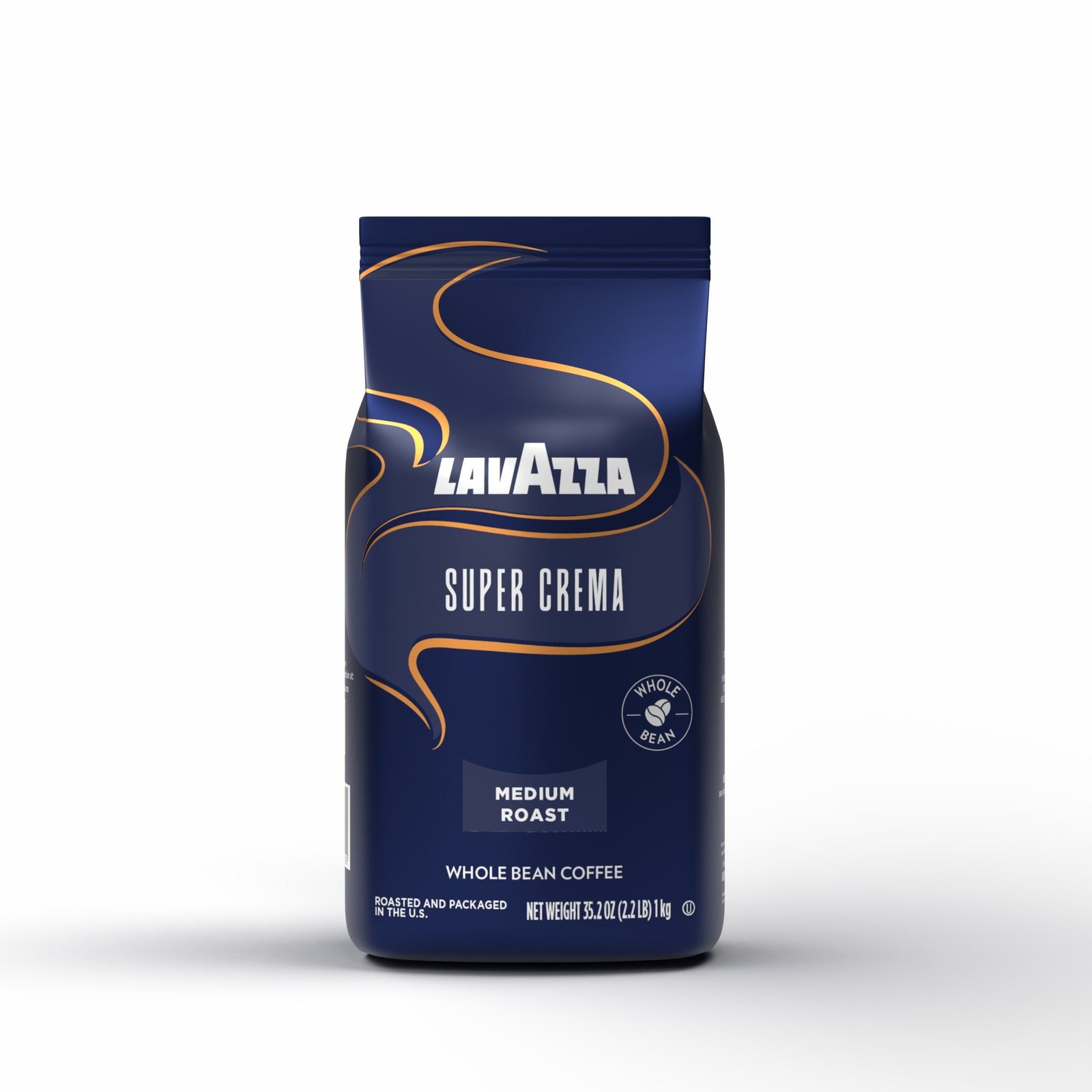
Lavazza Super Crema — Our Top Pick
Super Crema is Lavazza’s best-known espresso blend for a reason: the arabica/robusta mix at a medium roast produces the thick, hazelnut-colored crema that makes home shots look (and taste) like café shots. The brand describes notes of hazelnut and brown sugar, and it’s notably forgiving — it dials in easily across a wide range of grinders. The 2.2 lb bag is also the best value per ounce here.
- Roast: Medium roast espresso blend
- Beans: Arabica + Robusta blend (robusta boosts crema and body)
- Size: 2.2 lb (1 kg) bag — the largest here
- Flavor (brand’s notes): Lavazza lists hazelnut and brown sugar
Pros: Excellent crema production — the blend’s signature trait; forgiving to dial in for beginners; great in milk drinks; best per-ounce value in the roundup; widely available.
Cons: Medium roast won’t satisfy committed dark-roast drinkers; robusta adds body but also a slightly harsher edge some palates dislike; the big bag goes stale faster once opened unless you store it well.
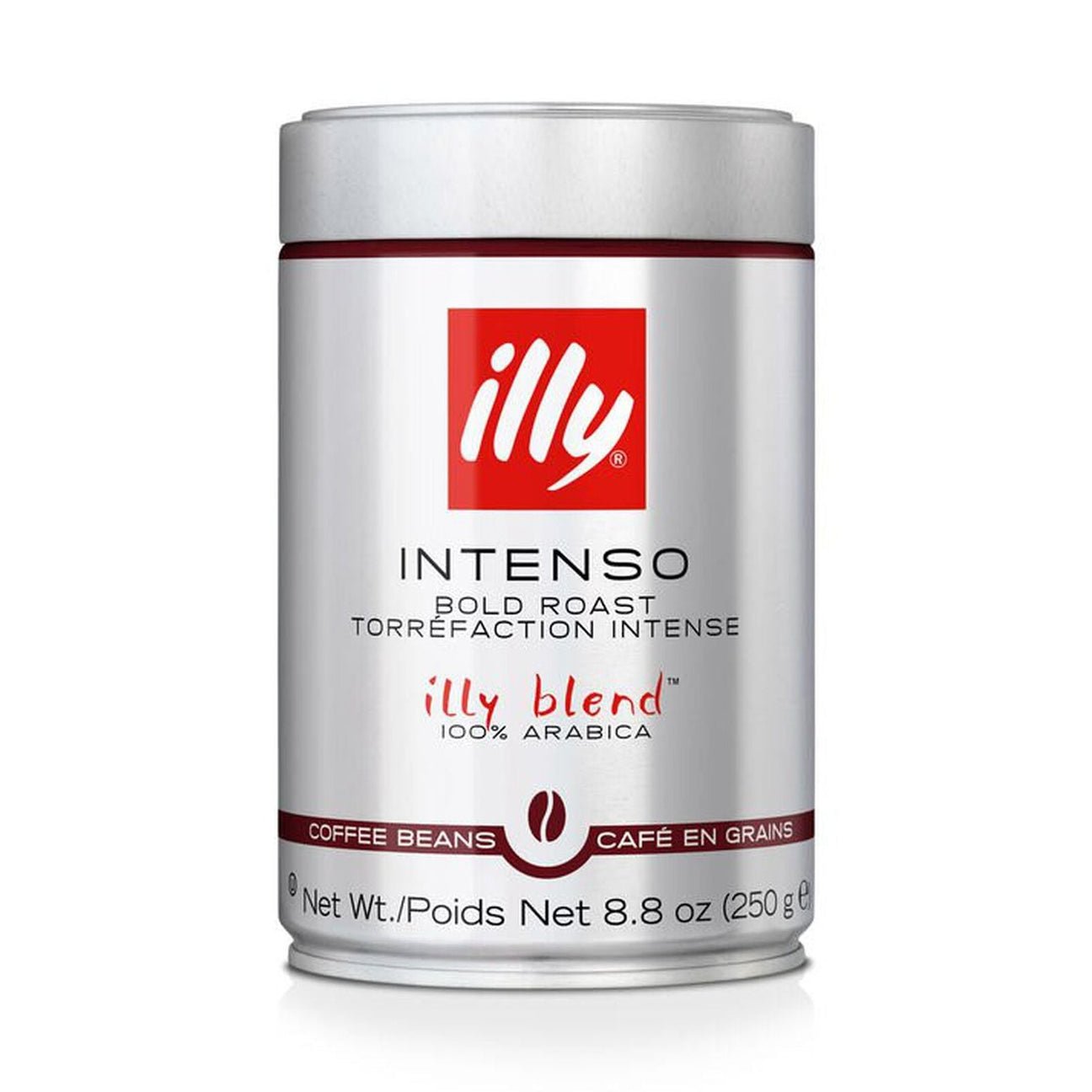
illy Intenso — Best Classic Italian Dark Roast
illy’s whole-bean Intenso comes in the brand’s signature pressurized can, which replaces air with inert gas to protect freshness — a real, patented packaging advantage, not just marketing. It’s a dark-roast 100% arabica blend; the brand describes notes of deep cocoa. If your ideal espresso is bold, low-acid, and unmistakably Italian, this is the connoisseur’s pick.
- Roast: Dark roast (Intenso = “intense” in illy’s lineup)
- Beans: 100% arabica blend
- Size: 8.8 oz pressurized can
- Packaging: Patented pressurized can for freshness (brand’s established technology)
Pros: Pressurized can keeps beans fresher than standard bags; refined, consistent roast quality; deep cocoa-forward profile suits straight espresso; no robusta harshness.
Cons: Premium price per ounce — the 8.8 oz can is the smallest here; dark roast means less sweetness and origin character; can format is less resealable than a valved bag once opened.
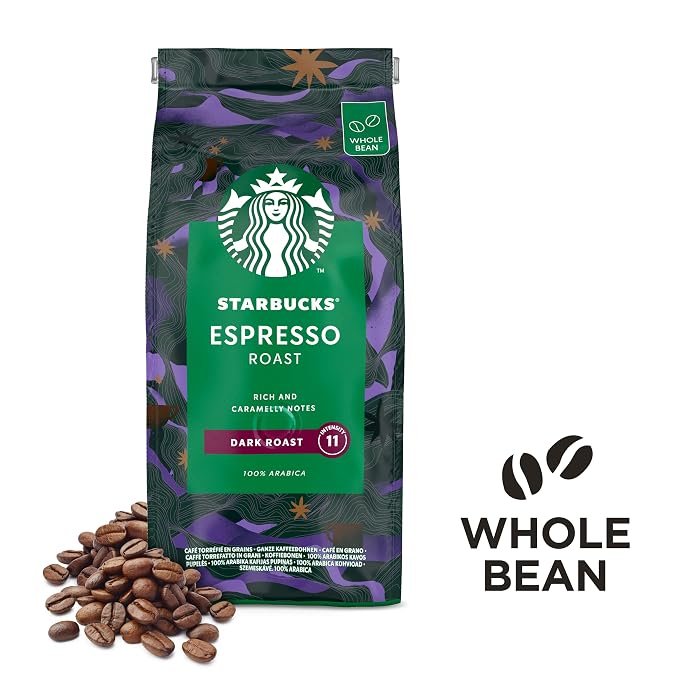
Starbucks Espresso Roast — Best Café-Style Dark Roast
This is the blend Starbucks has used as the base of its espresso drinks since 1975, and it tastes like it: dark, bold, and built to cut through milk. The brand describes notes of rich molasses and caramel. If you want your homemade latte to taste like the café version, this is the most direct route.
- Roast: Dark roast, 100% arabica
- Beans: Multi-region arabica blend (brand’s long-standing recipe)
- Size: 18 oz bag
- Flavor (brand’s notes): Starbucks lists molasses and caramel
Pros: Replicates the familiar café flavor at home; excellent in milk drinks; consistent and widely available; ethically sourced per the brand’s program.
Cons: Very dark — straight shots can taste ashy or bitter to sensitive palates; roast dates aren’t printed, so freshness varies by bag; not the pick for light-roast or fruity-espresso fans.
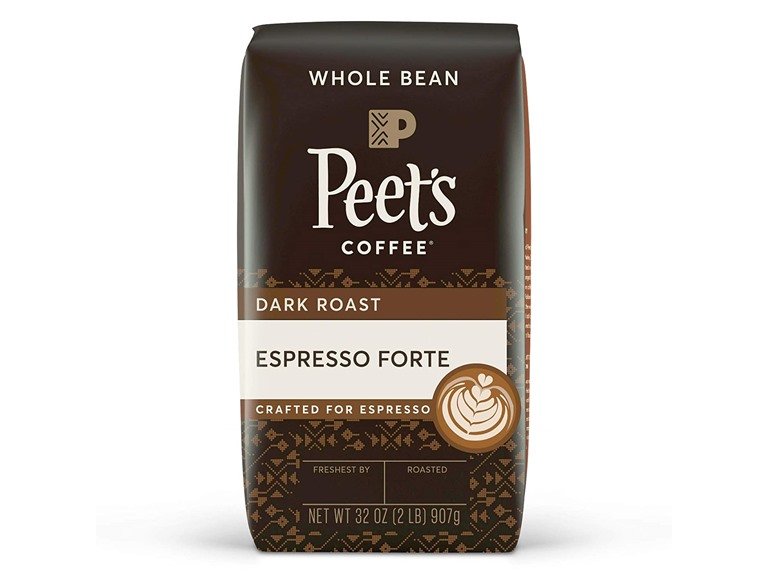
Peet’s Espresso Forte — Best for Freshness Transparency
Peet’s prints the roast date on every bag — a small detail that matters, because espresso peaks roughly 1–4 weeks off roast. Espresso Forte is the brand’s dedicated espresso blend: dark roast, 100% arabica, with the brand describing chocolate, hazelnut, and smooth crema. The 32 oz bag suits heavy home use.
- Roast: Dark espresso roast, 100% arabica
- Freshness: Roast date printed on the bag (brand’s transparency practice)
- Size: 32 oz bag
- Flavor (brand’s notes): Peet’s lists chocolate and hazelnut
Pros: Roast date on the bag lets you judge freshness before buying; built specifically for espresso (not a repurposed drip blend); good value in the large bag; strong crema.
Cons: Dark roast profile won’t suit medium-roast lovers; the 32 oz bag is a lot of coffee — it can go stale before you finish it at one-shot-a-day pace; bolder and earthier than Italian-style blends.

Death Wish Espresso Roast — Best for High-Caffeine Intensity
Death Wish built its name on strong coffee, and the Espresso Roast leans into it: a dark-roast arabica/robusta blend the brand markets as seriously caffeinated, with USDA Organic and Fair Trade certification. The brand describes notes of caramelized sugar, cocoa, and cherries. Buy it for the intensity; stay for the surprisingly smooth dark-chocolate finish.
- Roast: Dark roast espresso blend
- Beans: Arabica + Robusta (robusta = more caffeine and crema)
- Size: 14 oz bag
- Certifications: USDA Organic and Fair Trade Certified per the brand
Pros: The strongest caffeine kick in this roundup (a function of the robusta content — the brand’s positioning, consistent with coffee chemistry); organic and fair-trade certified; bold flavor that holds up in large milk drinks.
Cons: Intensity isn’t for everyone — it can overwhelm delicate palates; 14 oz bag is on the small side for the tier; robusta’s edge shows in straight shots.

Kicking Horse 454 Horse Power — Best Organic Dark Roast
Kicking Horse’s 454 Horse Power is the certified-good-citizen dark roast: organic, Fairtrade, and kosher, roasted in the Canadian Rockies. The brand describes a heavy body with sweet tobacco, earthy notes, and a black licorice finish. It’s a 100% arabica dark roast for drinkers who want bold without robusta.
- Roast: Dark roast, 100% arabica
- Certifications: Certified organic, Fairtrade, kosher per the brand
- Size: 10 oz bag
- Flavor (brand’s notes): Kicking Horse lists sweet tobacco, earthy, black licorice
Pros: Strong ethical certifications; bold dark-roast character from arabica alone — no robusta harshness; distinctive earthy profile stands out from Italian-style blends.
Cons: The earthy/licorice profile is polarizing — try it before committing to a subscription; 10 oz bag is the smallest here; less crema than robusta-containing blends.
How to Choose Espresso Beans
Roast level first: Medium roasts (Lavazza Super Crema) are sweeter, more forgiving, and show more origin character. Dark roasts (illy Intenso, Starbucks, Peet’s, Death Wish, Kicking Horse) are bolder, lower in acidity, and better at cutting through milk. Neither is “better” — it’s a taste preference, but beginners have an easier time with medium.
Arabica vs. robusta: Arabica is smoother and more aromatic; robusta adds caffeine, body, and thicker crema — but also a harsher, rubbery edge some drinkers dislike. Blends (Lavazza, Death Wish) split the difference. If your shots taste thin, a robusta-containing blend is worth trying.
Freshness: Espresso is the most freshness-sensitive brew method. Beans peak roughly 1–4 weeks after roasting and decline after that. Peet’s prints the roast date; for others, check the bag and prefer recently stocked sellers. Buy whole bean and grind just before brewing — pre-ground goes stale in days.
Bag size: Match the bag to your consumption. A 2.2 lb Lavazza bag is great value for a two-espresso-a-day household but will go stale for occasional drinkers. Smaller bags (illy’s 8.8 oz can, Kicking Horse’s 10 oz) stay fresher for light users.
For milk drinks vs. straight shots: Dark, bold roasts (Starbucks, Peet’s, Death Wish) punch through milk. Smoother medium roasts (Lavazza) and refined dark roasts (illy) shine as straight espresso. Decide what you drink most.
Who Should Buy (and Who Should Skip)
Buy whole espresso beans if you:
- Own a burr grinder (or plan to get one) — whole beans are the point
- Brew espresso, moka pot, or strong milk drinks regularly
- Want noticeably better shots than pre-ground or pods
Skip them if you:
- Don’t have a grinder — buy ground coffee or pods instead (stale whole beans you can’t grind are useless)
- Drink one cup a week — small bags or café visits make more sense
- Prefer light, fruity coffee — these are all medium-to-dark espresso roasts by design
Dialing in your brew setup? See our pour-over coffee makers roundup for slower brewing methods, or grab a portable ice maker if iced lattes are your thing.
Frequently Asked Questions About Espresso Beans
What makes coffee beans “espresso beans”?
Mostly the roast and the blend. “Espresso” beans are typically roasted medium-dark to dark and blended for body, low acidity, and good crema under pressure. Any fresh whole bean can technically be brewed as espresso — but blends designed for it dial in more easily.
Do I need a grinder for whole bean espresso?
Yes — espresso needs a fine, consistent grind that only a burr grinder delivers well. Blade grinders produce uneven particles that make shots channel and taste sour. If you don’t have a grinder yet, buy one before upgrading beans.
How should I store espresso beans?
In an airtight container at room temperature, away from light — use within 2–4 weeks of opening. Don’t freeze and thaw repeatedly; if you must freeze, portion into weekly bags first. The fridge is the worst option (moisture and odors).
Why does my espresso taste sour or bitter?
Sour usually means under-extraction — grind finer or extend the shot. Bitter usually means over-extraction or too-dark a roast for your taste — grind coarser or try a medium roast like Lavazza Super Crema. Fresh beans and a consistent grind fix most bad shots.
Is robusta bad in espresso blends?
Not inherently — Italian tradition uses robusta for crema and body. Cheap robusta tastes rubbery, but quality robusta (as in Lavazza’s blends) adds intensity without ruining the cup. If you dislike any harshness, stick to 100% arabica options like illy or Kicking Horse.
Final Verdict: Best Espresso Beans
Lavazza Super Crema is our pick for most home brewers: a forgiving medium roast with excellent crema, great milk-drink performance, and the best value per ounce here. After comparing all the options, this remains our top recommendation for the best espresso beans.
If you want the classic Italian dark-roast experience, illy Intenso is the refined choice with genuinely better packaging for freshness. And if intensity is the goal, Death Wish Espresso brings the strongest kick of the bunch.
As an Amazon Associate we earn from qualifying purchases. Prices and availability change frequently — see Amazon for the latest.
How we researched: We compared roast profiles, blend compositions, and packaging from current Amazon listings (verified October 2026), aggregated common pros and cons from verified-purchase reviews and home-barista forums, and scored the factors that matter most for home espresso: roast profile, blend, freshness, bag size, and value. Tasting notes cited are the brands’ own published descriptions, not our independent tasting. Brand claims (e.g. caffeine strength, freshness technology) are the manufacturers’ own marketing and were not independently verified by us. We did not receive free products from any brand. Last updated: October 13, 2026.
Manufacturer resources for espresso beans: Lavazza, illy, Starbucks.


Pingback: Best Pour-Over Coffee Makers & AeroPress (2026) - Products Buy Reviews
Pingback: Best Ice Cream Makers for Home 2026: 6 Compared
Pingback: Electactic Espresso Machine with Grinder: Review (2026)