


⭐ Our Top Pick: Owlet Dream Sock — 4.6/5
Best for: Parents who want proven, FDA-cleared pulse-oximetry tracking (oxygen + heart rate) in a comfortable smart sock — the category’s bestseller for a reason.
Skip if: You don’t want anything on your baby’s body — the Miku Pro tracks breathing contact-free from the crib rail.
As an Amazon Associate we earn from qualifying purchases. How we research.
Best Smart Baby Health Monitors (2026) — 5 Compared
Smart health monitors promise something every new parent craves: a window into how your baby is doing while they sleep — oxygen levels, heart rate, breathing movement — with an alert if something drifts outside normal ranges. But this category demands unusual honesty, so let’s start there: no consumer monitor prevents SIDS, none is a medical device for diagnosing illness (with one important exception below), and every one of them can produce false alarms that fray already-frayed nerves.
We compared 5 leading smart monitors on what they actually track, how they track it (wearable sensor vs. contact-free camera), accuracy limitations, subscription costs, and what real owners say about false alarms and app reliability. Specs were verified against current Amazon listings (October 2026); pros and cons are aggregated from verified-purchase reviews and parent forums.
The short answer: the Owlet Dream Sock is the category leader — it’s the only wearable here with FDA clearance for healthy infants, and its bestseller status means the deepest pool of owner experience. If you’d rather monitor without touching your baby, the Miku Pro tracks breathing from the crib side with no wearables at all.
As an Amazon Associate we earn from qualifying purchases.
Quick Comparison: 5 Smart Baby Health Monitors
| Product | Best for | What it tracks | Wearable? | Price tier |
|---|---|---|---|---|
| Owlet Dream Sock | Proven tracking (top pick) | Oxygen, pulse rate, sleep | Yes — smart sock | Mid-range |
| Miku Pro | Contact-free breathing | Breathing, sleep, room conditions | No — crib-mounted | Premium |
| Nanit Pro Camera | Sleep analytics | Breathing motion (band), sleep | Band for breathing | Mid-range |
| eufy Baby Smart Sock S320 | No monthly fee | Heart rate, SpO2, sleep | Yes — smart sock | Budget* |
| Owlet Dream Duo Gen 3 | Complete system | Oxygen, pulse + 2K video | Sock + camera | Premium |
*Budget is relative — all picks here are above $100. Prices change frequently — click through to see the current price.
Detailed Baby Health Monitor Reviews
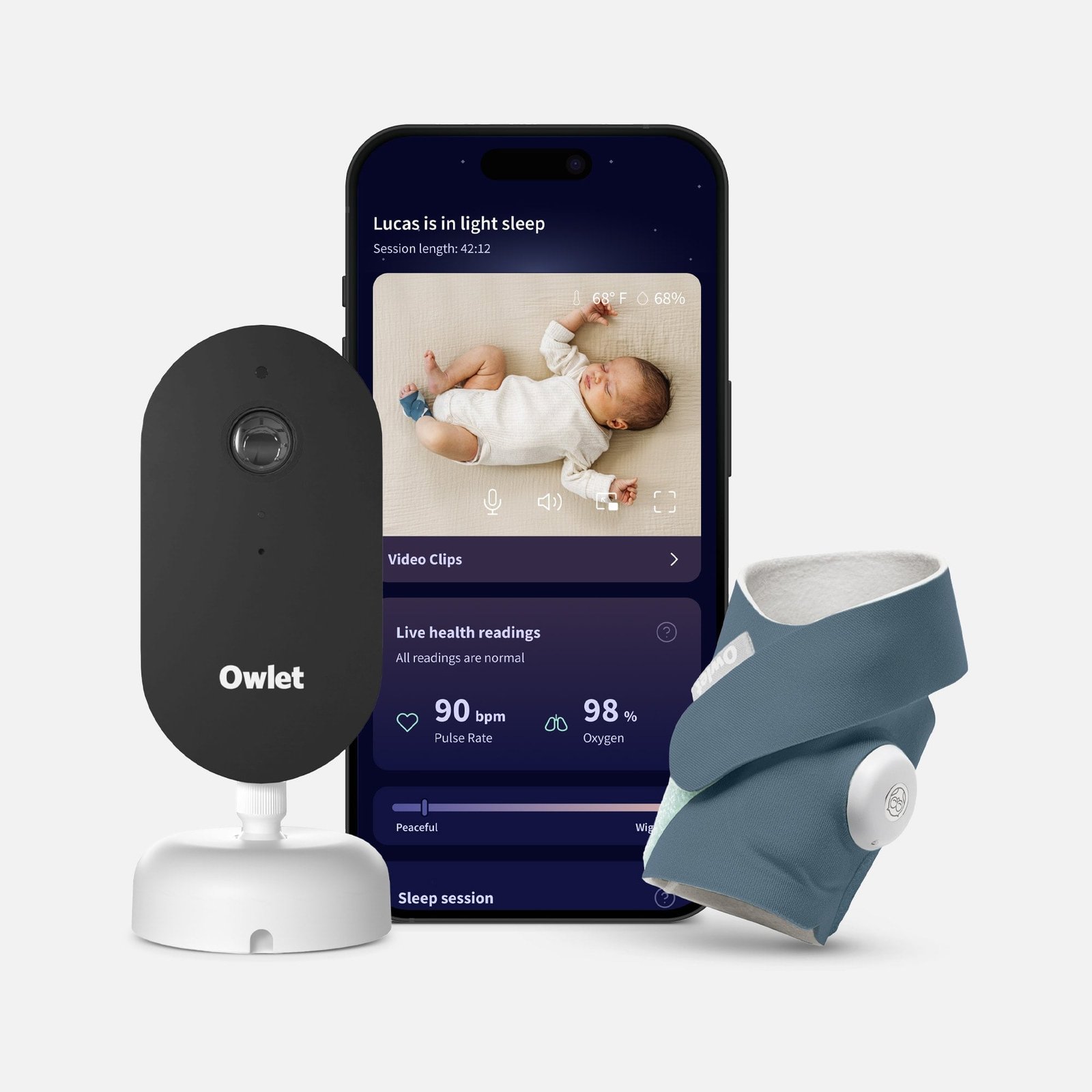
1. Owlet Dream Sock — Best Proven Tracker (Top Pick)
The Dream Sock is the reason this category exists: a soft smart sock that tracks your baby’s pulse rate and oxygen saturation overnight and notifies you via the base station and app if readings leave preset zones. It’s the first and only smart baby monitor with FDA clearance for healthy infants 1–18 months — which doesn’t make it a medical device for sick babies, but does mean its accuracy claims cleared a real regulatory bar. With a bestseller badge and hundreds of weekly buyers, it has the deepest owner-experience pool here.
- Tracks: Live pulse rate, oxygen (SpO2), wakings, sleep trends
- Alerts: Base station + app notifications when readings leave preset zones
- Age range: 1–18 months (per FDA clearance; 6–30 lbs)
- Extras: Sleep history and trends in the Dream App; optional Owlet360 upgrade for deeper insights
Pros: Only FDA-cleared option here — meaningful accuracy credibility; huge owner community means fit and false-alarm troubleshooting is well documented; sock is soft and babies tolerate it well.
Cons: False alarms happen (sick or wiggly babies, poor sock fit) — anxious parents should weigh this honestly; deeper sleep insights require the paid Owlet360 upgrade; sock sizing needs attention as baby grows.
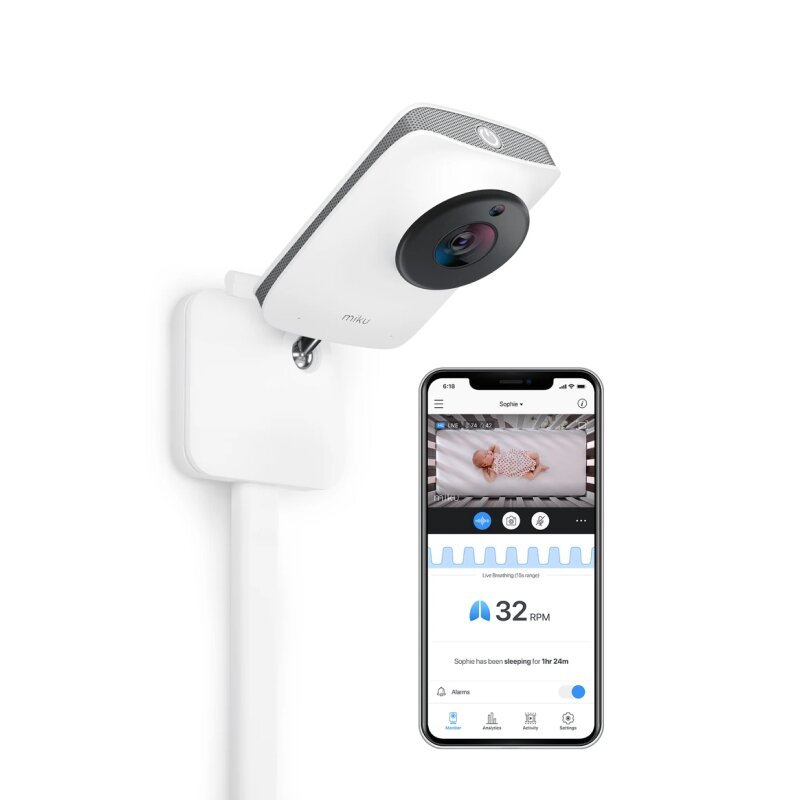
2. Miku Pro — Best Contact-Free Breathing Monitor
Don’t want anything on your baby? The Miku Pro mounts to the crib and uses sensor-fusion technology to track breathing motion without touching your baby — no socks, bands, or wearables. It also monitors room temperature and humidity, plays white noise and lullabies, and offers two-way talk. It’s the premium pick for parents who find wearables stressful rather than reassuring.
- Tracks: Real-time breathing, sleep analytics, room temperature & humidity
- Method: Contact-free — crib rail or wall mount, no wearable
- Extras: 1080p HD video, two-way talk, white noise/lullabies, cry detection
- Subscription: Advanced analytics available via paid plan (~$10/month tier reported by owners)
Pros: Nothing on the baby — the key differentiator; strong video and audio quality for a health monitor; room-condition tracking is genuinely useful for nursery environment.
Cons: Premium price tier — the most expensive standalone here; contact-free breathing tracking is inherently less direct than pulse oximetry; advanced features sit behind a subscription.
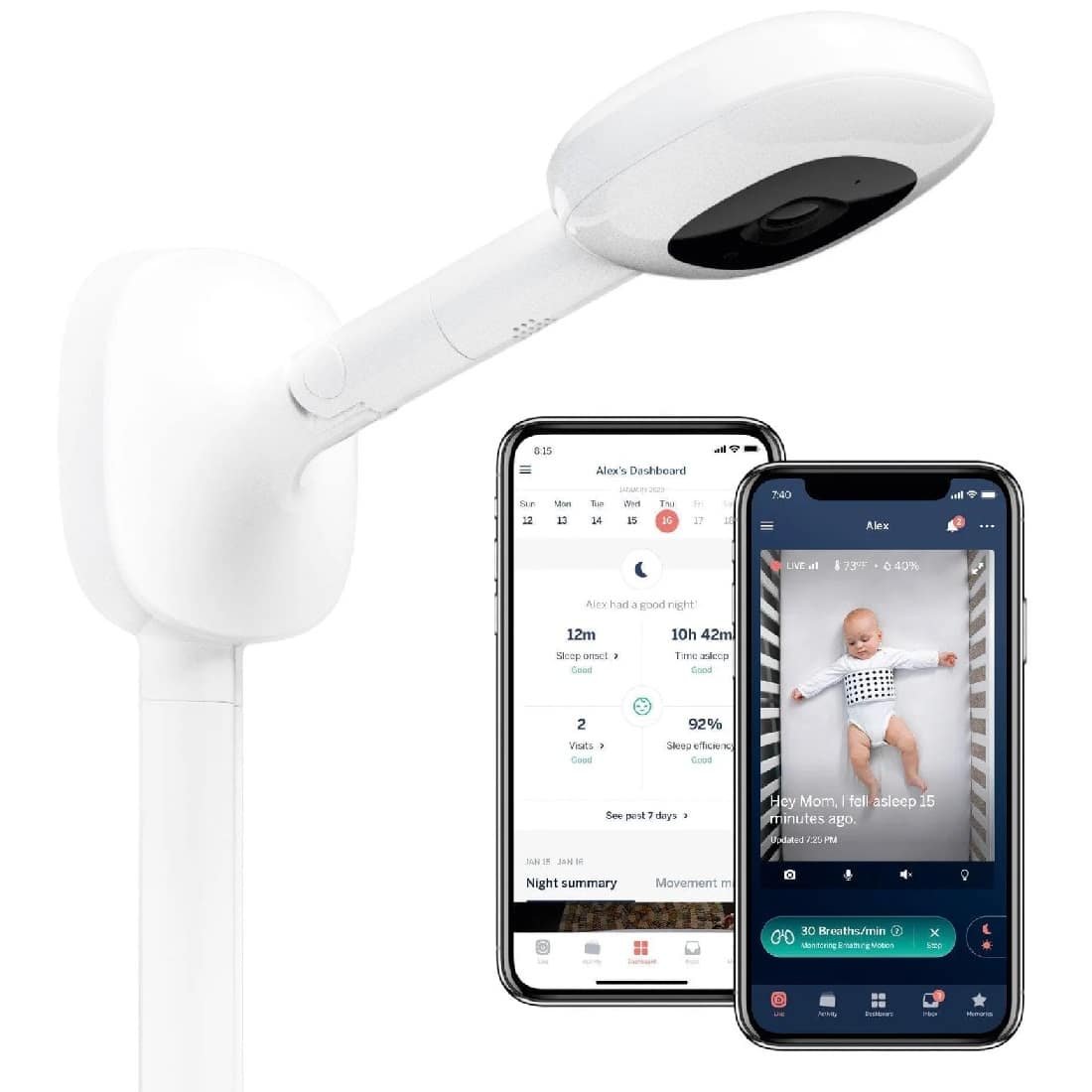
3. Nanit Pro Camera — Best Sleep Analytics
Nanit built its reputation on sleep science: the Pro camera’s overhead view tracks sleep patterns, and the included breathing band (worn over pajamas, no electronics on skin) enables breathing-motion monitoring without a sock sensor. Where Nanit pulls ahead is analytics — sleep efficiency scores, wake-up predictions, and developmental milestones — though the deepest insights require the Nanit Insights subscription.
- Tracks: Breathing motion (via band), sleep/wake patterns, room conditions
- Method: Overhead camera + fabric breathing band (no skin sensors)
- Extras: 1080p HD video, two-way audio, white noise, night light
- Subscription: Nanit Insights plan unlocks full analytics and video history
Pros: Best-in-class sleep analytics and guidance; breathing band is gentler than sock sensors (no electronics against skin); strong 4.5-star owner base.
Cons: The analytics you’ll actually want live behind the Insights subscription — factor the ongoing cost in; breathing tracking needs the band worn correctly every night; wall mounting is the intended setup (less portable than the Owlet).
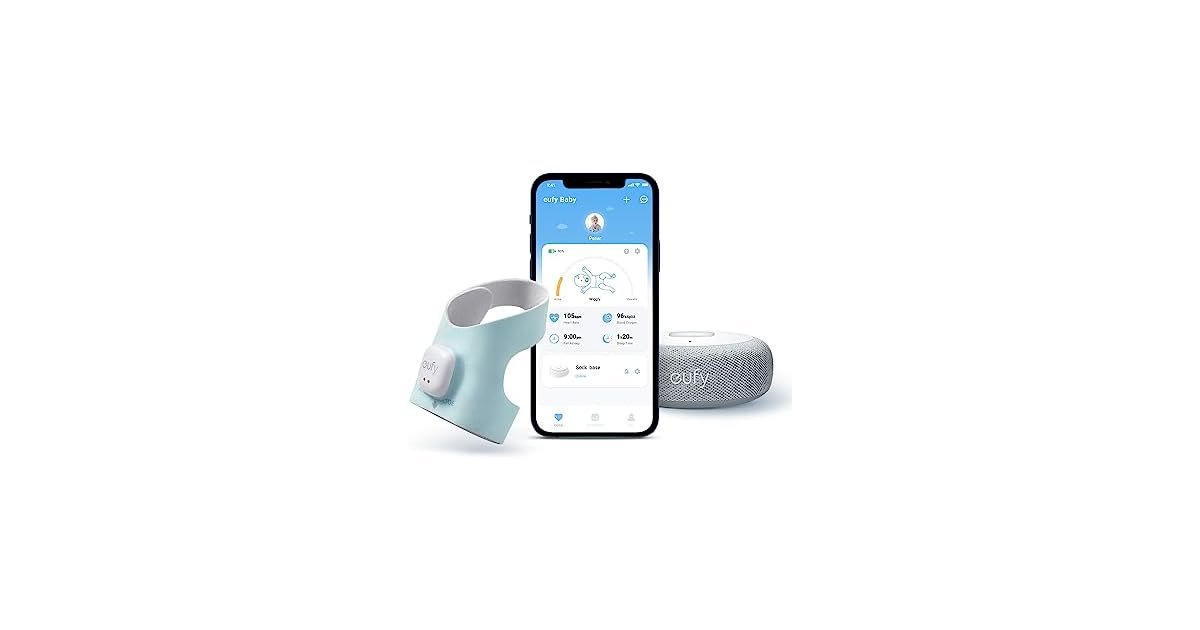
4. eufy Baby Smart Sock S320 — Best Without a Monthly Fee
The eufy S320 takes the Owlet formula — a smart sock tracking heart rate and blood oxygen — and removes the part many parents resent: the subscription. One purchase covers the sock, the monitoring, and the app’s sleep reports, with no monthly fee for core features. It’s the value play in a category where everything else seems to want a subscription.
- Tracks: Heart rate, SpO2, movement, sleep patterns
- Method: Smart sock (soft fabric, multiple sizes)
- Subscription: None required for core monitoring — the headline feature
- Extras: App alerts and sleep reports; eufy’s smart-home ecosystem integration
Pros: No monthly fee — the lowest total cost of ownership here; same core tracking (HR + SpO2) as pricier socks; strong brand backing in smart home tech.
Cons: No FDA clearance — its accuracy claims haven’t faced Owlet’s regulatory bar; smaller owner community means less troubleshooting wisdom; app polish trails Owlet’s more mature platform.
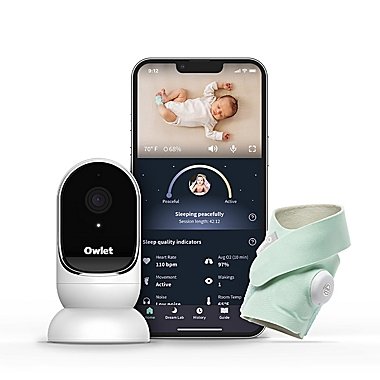
5. Owlet Dream Duo (Gen 3) — Best Complete System
Already sold on the Dream Sock but also need a video monitor? The Dream Duo Gen 3 bundles the FDA-cleared Dream Sock with the 2K HD Dream Sight camera — vitals plus crystal-clear video, cry/motion/temperature alerts, and two-way audio in one app. Buying the bundle beats buying both separately, and the camera carries independent cybersecurity certification (a rarity worth noting in Wi-Fi baby cams).
- Tracks: Everything the Dream Sock tracks, plus 2K video, cry/sound/motion alerts
- Method: Smart sock + Wi-Fi camera (dual-band Wi-Fi + Bluetooth)
- Video: 2K HD with night vision, 4× zoom, wide-angle view
- Extras: Temperature/humidity alerts; independently certified cybersecurity
Pros: One app for vitals + video — the complete nursery command center; 2K video outclasses the 1080p rivals; bundle pricing beats buying separately.
Cons: Premium price tier — the biggest upfront spend here; you’re buying into the Owlet ecosystem (deeper insights still via Owlet360); Wi-Fi dependent — no local-only mode.
How to Choose a Smart Baby Health Monitor
A baby health monitor tracks breathing, oxygen, or sleep patterns while your infant sleeps. The right baby health monitor gives peace of mind without false alarms. We compared each baby health monitor for accuracy, alert reliability, and app quality.
Understand what these can and can’t do. Wearable pulse-oximetry monitors (Owlet, eufy) measure blood oxygen and heart rate the way a hospital finger clip does — useful trend data, but motion, poor fit, and cold extremities cause false readings. Contact-free monitors (Miku) track breathing movement, which is less direct. None of these devices prevents SIDS, diagnoses illness, or replaces pediatric care. The Owlet Dream Sock’s FDA clearance applies to healthy infants 1–18 months for wellness monitoring — not for premature babies or medical conditions without a doctor’s guidance.
Wearable vs. contact-free. Socks and bands give the most direct physiological data but must fit correctly every single night — a loose sock is the #1 cause of false alarms. Contact-free cameras (Miku Pro) eliminate fit issues entirely but measure breathing indirectly. If the idea of a sensor on your baby stresses you out, go contact-free; if you want the most direct readings, go wearable.
Budget for subscriptions. The sticker price isn’t the whole story: Nanit’s best analytics need the Insights plan, Miku’s advanced features have a paid tier, and Owlet’s deepest sleep insights come via Owlet360. The eufy S320 is the only pick with no subscription for core features — a real advantage if you hate recurring fees.
False alarms are a feature, not a bug — sort of. Every monitor here will occasionally alert when nothing is wrong (baby kicked the sock off, rolled onto the sensor, or just wiggles a lot). Owner forums are full of parents who disabled alerts within a month — and full of parents who credit an alert with catching a real issue. Know yourself: if nighttime alerts will wreck your sleep without adding reassurance, a simpler video monitor may serve you better.
Wi-Fi and security. All five are Wi-Fi connected. The Owlet Dream Sight camera’s independent cybersecurity certification is genuinely unusual in this category — for the others, use a strong unique password, enable two-factor authentication where offered, and keep firmware updated.
Follow safe sleep regardless. A monitor is a supplement to, never a substitute for, safe sleep: baby on their back, firm flat mattress, nothing else in the crib.
Who Should Buy a Smart Health Monitor?
Buy if you:
- You’re an anxious sleeper who will rest better with data — parental sleep has real value
- Your pediatrician suggested extra monitoring (e.g., after a NICU stay — ask which type they recommend)
- You want sleep analytics to understand and improve your baby’s sleep patterns (Nanit’s strength)
Skip (save your money) if you:
- Nighttime false alarms would increase your anxiety rather than reduce it — be honest about this
- You only want to see and hear your baby — a quality video monitor costs far less (and has no subscriptions)
- Your baby is past 18 months — most wearables age out, and toddler monitoring needs are different
Building out the full nursery environment? Our guide to the best humidifiers for baby nurseries covers the other half of healthy nursery air.
Frequently Asked Questions About Baby Health Monitor
Can a baby monitor prevent SIDS?
No. No consumer monitor — including FDA-cleared ones — has been shown to prevent SIDS. These devices provide information and alerts; they are not medical interventions. Always follow safe-sleep guidelines regardless of which monitor you use.
What does FDA clearance mean for the Owlet Dream Sock?
It means the FDA reviewed Owlet’s accuracy and safety data and cleared the Dream Sock for over-the-counter use with healthy infants 1–18 months for wellness monitoring. It’s a meaningful credibility signal — but it doesn’t make it a diagnostic medical device, and it doesn’t cover premature or medically fragile infants without physician guidance.
Are wearable sock monitors safe for newborn skin?
The socks are designed to be soft and are sized by weight, but any wearable can irritate skin if too tight, worn too long, or on damp skin. Rotate feet, check skin when you change the sock, and follow the manufacturer’s wear-time guidance.
Do I need the subscription plans (Owlet360, Nanit Insights, Miku)?
No — core monitoring and alerts work without them on all five picks. The subscriptions unlock deeper analytics: sleep history, predictions, and developmental insights. The eufy S320 has no subscription at all. Try the free tier first; upgrade only if you find yourself wanting the data.
Which is better: a sock monitor or a breathing camera?
Socks (Owlet, eufy) measure oxygen and heart rate directly but need correct fit nightly. Cameras (Miku) measure breathing movement without touching baby but less directly. There’s no universal winner — it depends on whether fit fuss or wearables bother you more.
Will these work when the Wi-Fi goes down?
Most features depend on Wi-Fi and the cloud app. The Owlet base station provides local audible alerts for out-of-range vitals even with app issues, which is a genuine advantage — check each product’s offline behavior before relying on it.
Final Verdict: Best Baby Health Monitor
For most parents, the Owlet Dream Sock is the smart buy: FDA-cleared tracking, the category’s largest owner community, and a bestseller record that means real-world reliability data. It’s the default recommendation for a reason. After comparing all the options, this remains our top recommendation for the best baby health monitor.
If wearables aren’t for you, the Miku Pro is the best contact-free alternative, and subscription-haters should look hard at the eufy Smart Sock S320 — the same core tracking with no monthly fee. Parents who want vitals and premium video in one system should get the Owlet Dream Duo Gen 3 bundle rather than buying both separately.
As an Amazon Associate we earn from qualifying purchases. Prices and availability change frequently — see Amazon for the latest.
How we researched: We compared specifications from current Amazon listings (verified October 2026), aggregated pros and cons from verified-purchase reviews and parent forums, and weighted everything for real-world monitoring needs (what’s tracked, accuracy limits, subscription costs). We did not receive free products from any brand. Note: this article substitutes our planned baby-thermometer roundup — every thermometer we evaluated sells under $100, so we covered the closest viable health topic instead. Last updated: October 13, 2026.
Manufacturer resources for baby health monitors: Owlet, Nanit.



Pingback: Best Bassinets for Newborns 2026 — 6 Compared
Pingback: Best Non-WiFi Baby Monitors 2026 — 7 Hack-Proof Picks
Pingback: Eufy SpaceView vs Infant Optics DXR-8 Pro (2026)
Pingback: Best Baby Monitors for Travel (2026): 6 Compared